
France is currently marking the anniversary of its first nuclear test. On the territory of today’s Algeria, President Charles de Gaulle ordered the detonation of a nuclear device with a yield of roughly 70 kilotons, making France the world’s fourth nuclear power. In total, France carried out more than 200 nuclear tests, over fifty of them atmospheric. It continued testing long enough for global environmental activists to launch protests with a fleet of ships in French Polynesia. Their vessel, the Rainbow Warrior, crashed hard into France’s vital interests: in 1985 it was sunk in Auckland harbour by agents of the French secret service.
I recall this because every great power – even a smaller one – reacts harshly when its vital interests are threatened, with limited willingness to respect borders, the sovereignty of other states or political costs, sometimes even at the price of civilian casualties. This is especially true when it comes to nuclear weapons. We see the same logic at work today: the United States together with Israel are striking Iran in order to prevent it from acquiring a nuclear weapon and developing its ballistic‑missile programme. For Israel, this is one of the highest security priorities in the region. For the US, it is about not only its regional interests in the Middle East, but also a global interest in preventing the proliferation of nuclear and missile technologies, while at the same time demonstrating its own capacity for action vis‑à‑vis China – and highlighting Russia’s inability to act.
The world is full of paradoxical alliances: it was France that helped Israel on its path towards a nuclear capability – a capability Israel has never officially acknowledged. France has repeatedly shown that it can act unilaterally, defend its interests by force and, in the last resort, support a strategic partner even in an area as sensitive as nuclear deterrence. We should therefore pay close attention and launch a serious pan‑European debate about what a French nuclear umbrella for Europe can and cannot mean today. It is not that simple, however. The French offer is valuable at least in that it can help shift European thinking about defence, deterrence and resilience in the 21st century.
What President Macron said
Macron’s update of France’s nuclear doctrine was delivered on 2 March 2026 at the Île Longue submarine base. In his speech, the president announced an increase in the number of warheads and at the same time refused to continue disclosing the size of the arsenal: “To prevent speculation, we will no longer publish numerical data on our nuclear arsenal.” This opacity is not a weakness but a deliberate part of the strategy – what French doctrine calls “strategic ambivalence”. The adversary should have to factor in uncertainty, not a precise inventory. Macron put it bluntly: “To be free, we must be feared; for others to fear us, we must be powerful!”
Equally important was what the president rejected: “We will not share the final decision, the planning process or the execution of a nuclear strike.” In both France and the United States, the decision to use nuclear weapons rests exclusively with the head of state. The structural difference lies elsewhere. The US doctrine physically deploys nuclear weapons on the territory of allies and, within NATO, shares the planning of their potential use. France does not participate in such arrangements, and Macron explicitly refused to offer any guarantee in the legal sense. A formulation that would be too rigid, so the logic goes, would lower the nuclear threshold and reduce the adversary’s uncertainty.
The key concept of the speech was “forward deterrence”: the temporary deployment of elements of France’s strategic air forces on allied territory and their integration into French exercises. The addressees of this offer were more specific this time than in previous years: Germany, Poland, the Netherlands, Belgium, Greece, Sweden and Denmark. The European dimension of French vital interests could thus cease to be a mere rhetorical flourish.
The hardware of French nuclear deterrence
During the Cold War, France built a full nuclear triad. It grew out of distrust toward shared US nuclear capabilities within NATO and the idea of French strategic autonomy. It consisted of aircraft capable of carrying nuclear weapons, submarines equipped with ballistic missiles and land‑based missile forces deployed on the Plateau d’Albion. Given their range, those land‑based missiles were primarily targeted at the Soviet Union. After roughly twenty‑five years, President Jacques Chirac abolished the ground‑based component and its missiles. This step was partly motivated by cost‑saving, but it was also a logical consequence of the post‑Cold‑War situation in which the Soviet Union no longer posed an immediate threat.
Today, the French nuclear arsenal still ranks roughly fourth in the world. The United States and Russia possess many times more warheads; China has a complete triad and its arsenal is growing rapidly. France, by contrast, relies on the principle of stricte suffisance– minimal but sufficient deterrence: it does not seek numerical parity but the ability to inflict unacceptable damage on an adversary. Publicly available estimates long worked with a figure of around 290 warheads, i.e. fewer than 300 weapons, but since Macron’s announcement on 2 March 2026 France no longer discloses the exact size of its arsenal.
French deterrence rests on a much smaller but still credible force structure: four Triomphant‑class submarines, each carrying 16 M51 ballistic missiles, and an air‑delivered component based on Rafale aircraft armed with ASMP‑A missiles. The M51 missiles are designed to carry MIRVs – multiple independently targetable re‑entry vehicles. The older version was reported to carry up to six warheads per missile, but France does not disclose the exact configuration of the newer variants.
The main role of nuclear weapons is not symmetry in numbers but deterrence. The paradox of deterrence is that its goal is to persuade an adversary not to take a given action. We can never be certain that deterrence is actually working, because an opponent may refrain from attack for reasons other than our credible deterrent. The failure of deterrence, by contrast, becomes obvious immediately.
For French taxpayers, the price of nuclear deterrence is roughly 7.4 billion euros per year – slightly more than the entire annual budget of the Czech Ministry of Defence.
Updating the “software” of French nuclear doctrine
The update of the “software” of French nuclear deterrence is what puts otherwise dormant hardware into motion: the key moment is the president’s speech. To a certain extent, every such speech is also political theatre: Île Longue, a modern submarine base in Brittany, and the sound of the Marseillaise create a stage on which the central role of the president in the strategic thinking of the Fifth Republic is reaffirmed. Macron’s 2 March 2026 speech confirmed this logic once again: in the French system it is the head of state who is the main carrier of doctrinal change and the personal guarantor of the country’s nuclear policy. That is why the Fifth Republic is sometimes called a “nuclear monarchy” – except that in this monarchy the sovereign is elected every five years.
Without being embedded in a network of relations among nuclear and non‑nuclear powers, the system cannot function; its purpose is deterrence, and the adversary we are trying to deter must know about the consequences of his actions – something Stanley Kubrick illustrated brilliantly in his film Dr. Strangelove when he has a Soviet general explain deterrence to the US president. The Soviet “Doomsday Machine” in the film is fully automatic: once the central computer and its sensors detect a nuclear attack on the USSR, the system ensures retaliation without human intervention – fully automatic and, above all, unavoidable, destroying not just the attacker but the entire planet. Automacity and inevitability are easy to grasp and therefore strongly dissuasive. But the world needs to know that such a weapon exists – if it is secret, it does not work. The president’s speech is, above all, a way of signalling nuclear doctrine to the world and to potential adversaries.
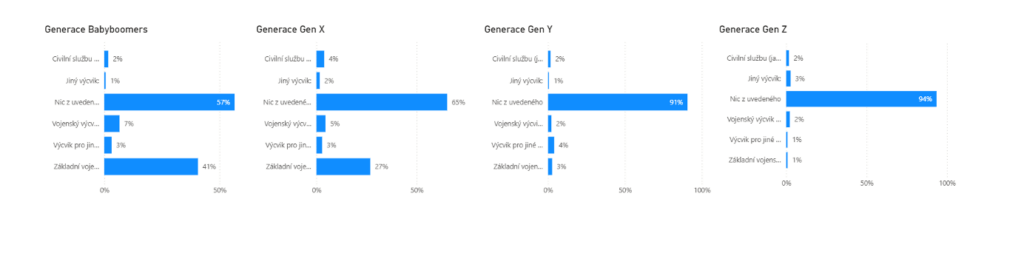
I myself had the opportunity to visit not only Île Longue but, as an ambassador, to spend a full day on board one of these submarines. Walking between the launch tubes in the cramped interior of a nuclear submarine, one cannot escape the thought that these boats could be the last islands of humanity on the planet, with a single remaining task: to fire more nuclear weapons. Even a single strategic submarine armed with ballistic missiles represents a destructive force many times greater than that unleashed by conventional bombing in the Second World War. Millennials and Generation Z experience anxiety over climate change. Baby boomers and part of Generation X – the cohort to which I belong – grew up fearing nuclear apocalypse and nuclear winter. Unlike much of Europe, France has not lost its nuclear culture. Among the launch tubes in the confined space of a submarine, apocalypse feels uncomfortably close.
The French president is commander‑in‑chief of the armed forces and bears sole responsibility for the decision to use nuclear weapons; this centralisation is one of the hallmarks of French doctrine. Public sources also refer to the SYDEREC system as a backup means of communication for the highest state leadership. One of the first tasks of a British prime minister is to write a “letter of last resort” – instructions for the captains of strategic submarines in case the British command is destroyed. The US and Russian presidents have even more robust systems of nuclear authority. Experts often discuss the notion that Russia inherited an automatic retaliatory system known as “Perimeter”, or the “Dead Hand”.
In presidential speeches, one idea appears with increasing frequency and can be summarised simply: French nuclear weapons exist to protect the vital interests of France – and these vital interests have a European dimension. The first half of this formulation deliberately leaves adversaries uncertain as to what exactly counts as a French vital interest – this is strategic ambivalence. Macron put it quite openly at Île Longue: French deterrence protects the nation’s vital interests, whose European dimension is, in his view, now obvious.
For France, nuclear weapons – together with overseas territories and bases, especially in the Pacific – are attributes of real power and instruments for exercising that power in contemporary geopolitics. French strategic thinking – despite current setbacks in Africa and the limits of French policy in Europe – has few parallels on the continent in its realism and existential urgency.
The main, indisputable advantage of the French offer is therefore the chance, through consultations, to share in the French strategic culture and to understand – from the perspective of non‑nuclear states or countries hosting foreign nuclear weapons – the real strategic dimension of decisions about nuclear deterrence. I have taken part in many classified exercises, consultations and seminars on this topic, and I have no doubt that nuclear weapons will remain the backbone of global security architecture in the 21st century. We should take the French offer deadly seriously – just as we should value highly the only real insight into this field that the NATO Nuclear Planning Group (NPG) provides. The NPG was established in December 1966 and remains the Alliance’s main consultative forum for nuclear matters.
The new version of the French “nuclear software” includes several updated features. The principle of minimal but sufficient deterrence – suffisance – will be strengthened beyond the 300‑warhead threshold, while France’s commitment to publish the exact number of warheads is ending. The adversary is supposed to calculate his potential losses as unacceptable and refrain from the intended action. At Île Longue, Macron announced both an increase in the arsenal and an end to precise public numbers; older open‑source estimates used the figure of around 290 warheads. The update is therefore primarily intended to reinforce the adversary’s belief that the French arsenal is sufficient for deterrence and that France is ready to adjust it in line with evolving threats.
The decision to use nuclear weapons will always rest solely with the French president, and only he will judge what reasons would justify such a step. The sentence that French nuclear weapons protect the vital interests of France – and that these interests have a European dimension – is meant to hint at the kind of reasons that might be decisive. The first part of the phrase leaves it to France’s adversaries to imagine what exactly those vital interests are – again, strategic ambivalence. The second part leaves it to European states to assess what the European dimension of those interests means and to what extent it helps build Europe’s credibility at a time when that credibility is desperately needed.
A particularly interesting feature of the updated doctrine is the concept of a nuclear warning shot – avertissement nucléaire. This denotes a unique, one‑off and non‑repeatable use of a nuclear weapon outside the context of strategic deterrence: a strike against the adversary’s most sensitive targets intended to cause unacceptable losses. In practice, this means rather tactical use of a nuclear weapon aimed at deterring further escalation. In the hypothetical case of a nuclear explosion outside populated areas – at sea or in space – such a step would place France, or any other state resorting to a warning shot, in a highly credible and advantageous position: there would be no doubt about its capabilities and willingness to use them, while casualties would be minimal. And if this were the first use of nuclear weapons since 1945, it would be a truly powerful tool of deterrence.
A particularly interesting feature of the updated doctrine is the concept of a nuclear warning shot – avertissement nucléaire. This denotes a unique, one‑off and non‑repeatable use of a nuclear weapon outside the context of strategic deterrence: a strike against the adversary’s most sensitive targets intended to cause unacceptable losses. In practice, this means rather tactical use of a nuclear weapon aimed at deterring further escalation. In the hypothetical case of a nuclear explosion outside populated areas – at sea or in space – such a step would place France, or any other state resorting to a warning shot, in a highly credible and advantageous position: there would be no doubt about its capabilities and willingness to use them, while casualties would be minimal. And if this were the first use of nuclear weapons since 1945, it would be a truly powerful tool of deterrence.
Coexistence of nuclear NATO and France’s extended nuclear doctrine
As long as nuclear weapons exist, NATO will remain a nuclear alliance. According to public estimates, around one hundred US nuclear warheads are deployed on the territory of the Netherlands, Belgium, Italy, Germany and Turkey. The NATO Nuclear Planning Group will celebrate its 60th anniversary this year. The system encompasses consultations, participation in exercises and, above all, the ability to shape the Alliance’s overall nuclear posture together – levels of readiness, signalling and deterrent posture. It offers everything France is now offering selectively to a few European states – but it is available to all allies except France, which has chosen not to participate. For Gaullist France, the NPG was always too constraining, and although Paris returned to NATO’s integrated military command in 2009 under President Sarkozy, it did not re‑join the Nuclear Planning Group. One key difference between the two systems is the level of sharing: under NATO arrangements, US nuclear weapons (B61 gravity bombs) are permanently stationed in four EU countries and in Turkey.
As long as nuclear weapons exist, NATO will remain a nuclear alliance. According to public estimates, around one hundred US nuclear warheads are deployed on the territory of the Netherlands, Belgium, Italy, Germany and Turkey. The NATO Nuclear Planning Group will celebrate its 60th anniversary this year. The system encompasses consultations, participation in exercises and, above all, the ability to shape the Alliance’s overall nuclear posture together – levels of readiness, signalling and deterrent posture. It offers everything France is now offering selectively to a few European states – but it is available to all allies except France, which has chosen not to participate. For Gaullist France, the NPG was always too constraining, and although Paris returned to NATO’s integrated military command in 2009 under President Sarkozy, it did not re‑join the Nuclear Planning Group. One key difference between the two systems is the level of sharing: under NATO arrangements, US nuclear weapons (B61 gravity bombs) are permanently stationed in four EU countries and in Turkey.
France is not preparing to enter a great‑power arms race – nor would that make economic sense. Nor can it expect, however, that first‑tier nuclear powers will treat it as an equal. Moscow recently made this clear when envoy Emmanuel Bonne, tasked according to Le Mondewith reopening a Macron–Putin channel, returned home empty‑handed. Russia respects strength and does not view European countries as equal partners. Diplomatically, it focuses on talks with the United States and its partnership with China. This is a sober reminder of the limits of French – and, by extension, European – strategic autonomy.
The NATO system of nuclear consultations has existed for six decades but has long attracted limited political attention. After the end of the Cold War, it receded into the background, and the West correctly maintained maximum restraint in its nuclear communication. That remains wise today: there is no need to mirror Russia’s nuclear rhetoric. Restraint and seriousness are more credible than hysterical threats. The NATO system will coexist with the new French initiative; it is not meant to replace it and cannot do so. NATO remains a nuclear alliance with global weight, and the US nuclear umbrella is a key part of the transatlantic bargain. At the same time, it is increasingly obvious that European thinking no longer perceives US guarantees as automatic but as politically conditioned – including by our own economic and military performance. Washington is making ever clearer that it has little interest in indecisive, weakening allies. Europe’s reluctance to contribute militarily to securing the Strait of Hormuz has only reinforced American scepticism.
Sixty years of NATO guarantees and a renaissance of the European nuclear debate
It is good that the French offer has been put on the table, and it is good that it will force us to talk more about nuclear weapons in Europe. But one simple question must be posed: are we going to trade American guarantees, which have worked for six decades, for a new French promise? That would risk being a tragic misunderstanding.
Nuclear weapons are not a topic for wishful thinking. I welcome the fact that France cares about Europe’s fate and that French taxpayers are keeping the last truly strategic asset on the European continent alive at a cost of roughly 13% of the defence budget. Europe needs a serious debate about nuclear weapons and its own security. The question of whether the United States will remain the ultimate guarantor of Europe’s nuclear and conventional security indefinitely has already been answered in effect: it will not. In the conventional realm, we will have to take care of ourselves. In return, the US offers to continue its nuclear guarantees – but only at the price of significant effort on our side. We should also be honest: the primary concern of this and every other American president will always be the safety of US citizens, not the safety of everyone.
French nuclear hardware and software function similarly: they are an effective insurance policy for the sovereignty of France and its citizens. Their geographic proximity and the closeness of our interests, however, make this system an attractive basis for further development and eventual extension of consultations towards future guarantees that would complement those of NATO. At this moment, though, an extension of French nuclear guarantees to other European states is not on the table.
The French offer is also an invitation to debate the greatest threat humanity has created – and, at the same time, the only truly convincing reason why the world has not yet plunged into the flames of a third world war.
Nuclear technology and its peaceful use are also central to the shift away from fossil fuels towards cleaner energy sources, and France has long built its energy strategy on nuclear power. Nuclear currently accounts for roughly two‑thirds of France’s electricity generation, not eighty per cent. As I write these lines, fuel prices are rising and Europe has few tools to change that on its own. The same holds in the field of arms racing between the US, Russia and China. It is naïve to think that nuclear weapons will not remain the backbone of global security. And it is equally naïve to believe that Europe, without NATO, could be a world‑class player.
Europe’s problem is not NATO, nor its dependence on the United States in energy, defence and advanced technologies. Europe’s problem is its long‑term refusal to take reality seriously. We need not only allies such as the United States and the United Kingdom, but also strong, confident military capabilities – and among EU states, France has built the most. We need confidence, economic growth and allies. What we do not need is the comforting illusion that we can cope entirely on our own.