
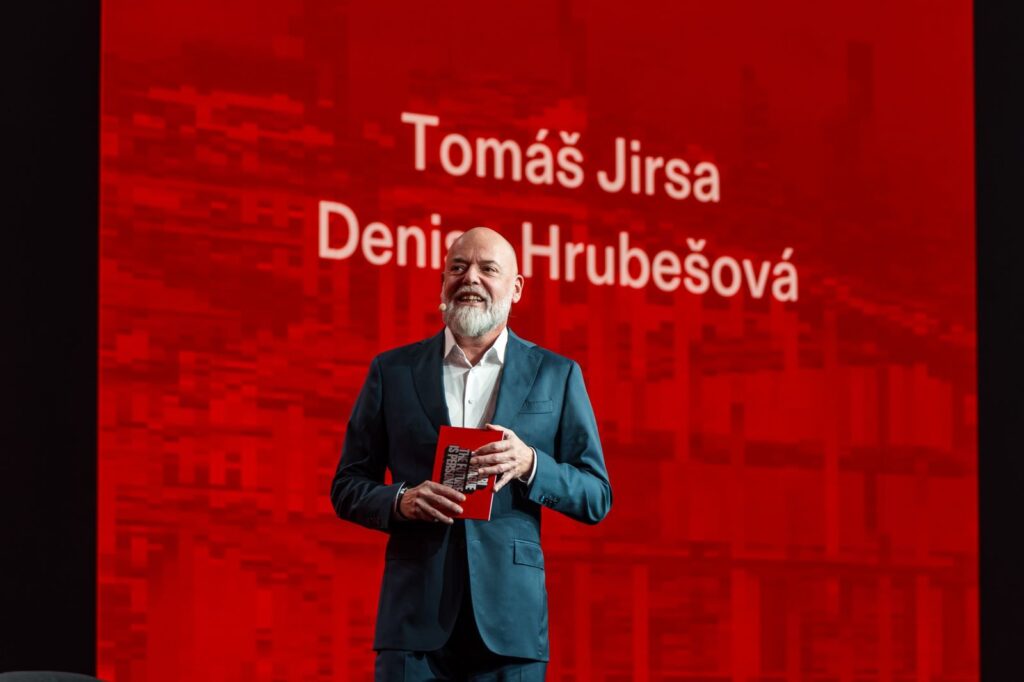
If you didn’t make it to our conference The Future Is Personal, don’t worry. We know your time is a precious commodity, so here is a short summary of the second panel. It was called Who Owns the Truth and looked at how truth is distributed today and who is, or should be, responsible for it. Words can’t quite capture the electric atmosphere on stage at Forum Karlín, but it would be a shame not to share the best moments.
The panel was moderated by David Shorf, and his guests were Denisa Hrubešová, co-founder and CEO of Forendors, and Tomáš Jirsa, investor, entrepreneur and the face of the Insider podcast.
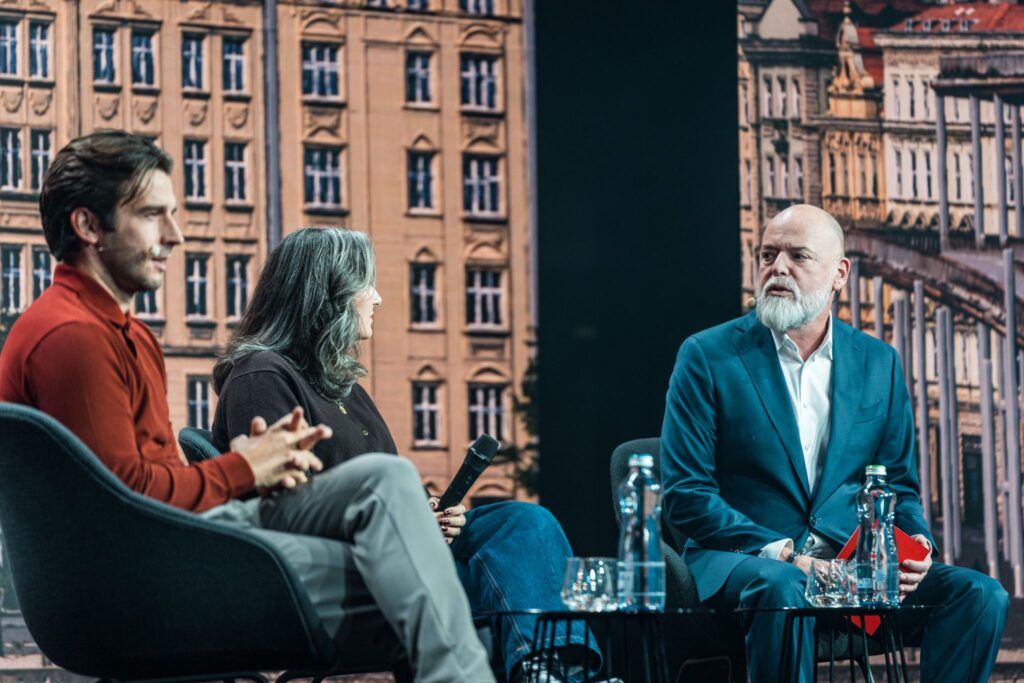
David opened by asking who holds the keys to truth today. Journalists and editors used to decide what reached the public. Today influencers, podcasters and recommendation algorithms have partly taken over that role. Tomáš pointed out that people naturally trust specific personalities they follow over time and whose views they know. Still, in his view, traditional media remain irreplaceable. They have fact-checking capacity that individual creators lack. Podcasts, he said, don’t replace journalism as a whole, only its opinion and commentary side.
Denisa admitted that, as the operator of a platform for creators, she feels a strong responsibility for the content it spreads, even though she believes a platform shouldn’t decide which opinions are right. So where does the limit of free speech lie? Tomáš doesn’t believe in a miracle regulation imposed from above. He puts his faith in community feedback, more transparent platforms and, above all, information literacy.
Denisa then shared a surprising example from Forendors itself: on her platform she discovered a fitness content creator who was entirely AI-generated. Does that have to be a problem if it’s just workout tutorials? Maybe not. The problem starts when the same technology begins producing political content and fueling radicalization.
Tomáš described how AI is changing podcast production: automated editing, he said, can cut production costs by as much as tenfold. Denisa, however, pointed to an interesting paradox. Although Forendors offers cheaper automated editing, customers aren’t interested. They miss human oversight and would rather pay more for the certainty that a person has checked the result. Technology brings efficiency, but it doesn’t automatically earn trust.
What will 2036 look like if AI builds everyone a world tailored to their interests and beliefs? Tomáš sees two extremes: more efficient access to quality content, or a society splintering into mutually hostile bubbles. Denisa highlighted a different risk. If we are surrounded only by opinions that confirm our own, we may lose the ability to respect others.
To close, Tomáš rejected the idea that a single rule or regulator could fix the information chaos. The second panel thus reached a conclusion similar to the first: the future of technology won’t depend only on what it can do, but above all on whether we can preserve trust, relationships and a shared reality.
Napsat komentář