Rubrika: eng

  • We’re shielding kids from Instagram. Meanwhile, AI is giving them dating advice

    We’re shielding kids from Instagram. Meanwhile, AI is giving them dating advice

    4–6 minut

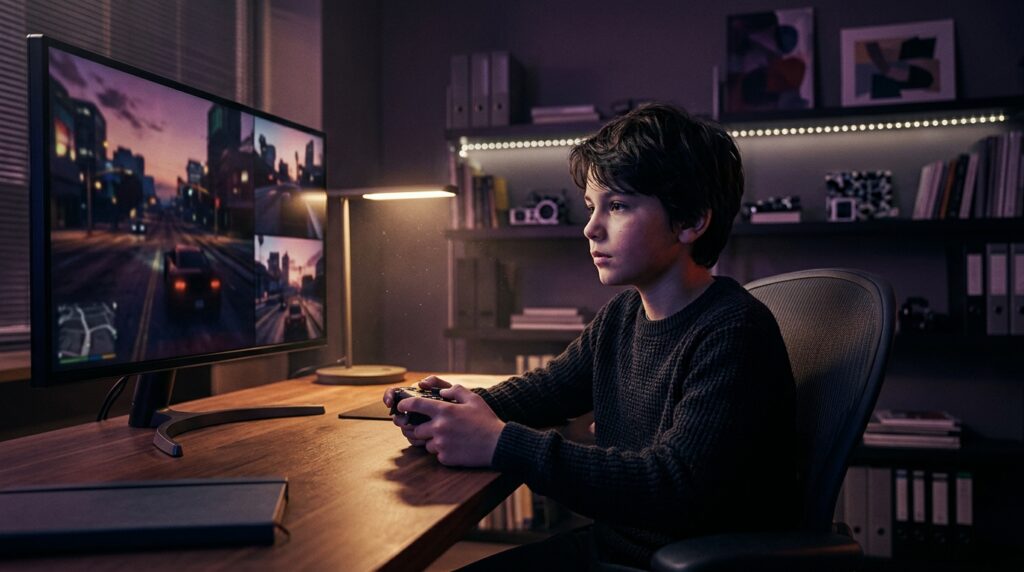
    Australia, Denmark and Portugal have already approved bans on children’s access to social networks, while France, Norway, Slovenia and the United Kingdom are preparing similar legislation. In the Czech Republic, both the prime minister and the president have expressed support for a ban, in rare emotional unison. But will this actually mean our children will be less at risk? I doubt it, because I fear we are “successfully” overlooking a much more significant threat to our kids: their interaction with artificial intelligence.

    First, though, to the idea of banning social media. I am a liberal, and I belong to the generation that, despite all the bans, smoked its first cigarette around the age of ten and a few years later was already visiting pubs on a fairly regular basis. My instinct to resist bans – knowing, among other things, that they are not that hard to get around – has been seriously shaken by my own children. One is 16, the other 25. I asked them a leading question that nudged them toward rejecting bans. Yet both agreed that social networks had brought them nothing positive in childhood and, in one case, something quite negative – something I am sorry I did not find out about at a time when I might still have been able to influence it. They also pointed out that the technological possibility of circumventing a ban does not mean that all children will know how to do it or will actually do it. At the same time, I learned that the real limit of what a ban can influence is the onset of puberty. After that, even those unlucky kids whose anxious parents have installed filters and tracking software on their phones can rely on the empathy of their peers – someone will lend them an older device they no longer use. As always, when it comes to banning social networks, there is nothing like consulting the true experts.

    But as the use of AI spreads, I keep hearing more and more stories about how children – and not only children – are using it as a friend, a “relationship guru”, simply as a substitute for a living person. And this is not just anecdotal. Studies – including those from MIT, the Pew Research Center, the Center for Democracy and Technology and Common Sense Media – agree not only that a majority of teenagers have experience with AI, but that roughly one third of them use it regularly. A non‑trivial share of young people also admit that you can build not only a “trustworthy friend” with AI, but even a “romantic relationship”. And stories of adults who start using – often corporate – AI systems to consult their life problems are not exactly rare either.

    That, to me, is significantly more worrying than any social network. AI based on language models has a built‑in goal that is very different from genuinely helping a “human friend”. It is a language model – it generates a response that is supposed to satisfy the person it is talking to. And unlike situations where AI helps us search, process or verify information, the moment we are dealing primarily with emotional needs, its answer will almost inevitably be guided mainly by affirmation and agreement. Even in cases where it would be far more reasonable to challenge the behavior of the person who has the problem.

    Shakespeare already had a character for this: Iago. The one who always tells you what you want to hear, while pursuing completely different aims. A language model works in a similar way, only without the malicious intent – which may well make it even more dangerous. Experts put it more soberly. From academia, T. Sun (Rice University) notes: “Adolescents are developing core emotional and social skills – chatbots are simply not designed for that. If young people begin to entrust AI with their relationships and life decisions instead of turning to people, the risk is not only misinformation, but above all a gradual shift in what they expect from relationships, emotions and help itself.” And from those who are already dealing with such impacts in practice, V. Wright of the American Psychological Association says: “AI will never replace human connection. It simply is not built for that.” On top of that, chatbots are designed to keep our attention for as long as possible – because that is how their creators make money.

    As an economist, I have to add another layer: we expect AI to push us out of routine activities – and especially out of exactly those areas where human interaction is needed.

    And I am convinced that the worst possible preparation for our children – who are already, to a large extent, replacing the real world with the virtual one – for such roles is a situation in which they substitute communication with people by chatting with “AI buddies”. So this is not just about emotional risks. It is about the fact that they will fail to learn skills that could help them find their footing in the economy of the world that is coming.

    I am neither a lawyer nor an IT specialist – although during my studies, including my PhD in the United States, I did in fact make a living in this field – but it does not seem impossible to me to define requirements for AI “communicators” that would oblige them to recognize when they are interacting with a child or an adolescent and to be highly restrictive in conversations that substitute for a human confidant dealing with relationships. And I am convinced that situations in which AI is consulting “people for people” – and even more so “people for children” – deserve far more of our attention than debates about how to protect children from social networks.

  • Mounjaro, Ozempic and the end of obesity as we know it

    Mounjaro, Ozempic and the end of obesity as we know it

    (aneb když injekce porazí vůli a změní ekonomiku)


    Until very recently, obesity was one of those issues we talked about in much the same way as climate change: everyone knows it is a disaster, everyone feels guilty about it, and yet nothing much changes at the core. The advice keeps repeating, diets follow diets, people lose weight and gain it back in a yo‑yo rhythm. Gyms fill up in January with “resolution‑makers” only to empty out again in February. It all looks a bit as if society were breathing: an inhale of hope, an exhale of resignation.
    And then Mounjaro arrived. And with it, a strange silence. Not in the media. A biological one.

    For the first time in modern history, we are not confronting obesity with moralizing or discipline, but with a technology that elegantly sidesteps the whole debate about willpower. Drugs in the GLP‑1 class do something disturbingly simple: they switch off hunger. Or more precisely, they rewrite its intensity. A person eats less not because they have stronger willpower, but because they simply no longer want more. No inner struggle, no bargaining, no late‑night voice scolding them for yet another secretly eaten chocolate bar.

    What is striking is that this topic is nowhere near as prominent in the media as AI. Yet this is not a minor innovation, but a genuine paradigm shift.

    Biology defeats character

    For decades, we framed obesity as a personal failure disguised as statistics. Every chart doubled as a moral verdict. Fatness was not an illness but proof of weakness. GLP‑1 drugs shatter this story with the cold elegance of a lab experiment. They show that hunger is not an abstract notion, but a chemical signal – and that someone’s “gluttony” may simply be a differently wired brain.

    At that moment, the entire cultural scaffolding collapses. If obesity is a biological condition, shame stops making sense. Heroism stops making sense. And above all, a vast industry built on people failing so that they can try again stops working. When food stops screaming, there is nothing left to silence.

    An economy after the injection

    It is no coincidence that obesity has suddenly begun to appear in economic analyses. Consultants at McKinsey & Company speak of GLP‑1 drugs as a “game changer”, and they do not mean healthcare. They mean a world in which millions of people eat less. And differently. And with far less emotional investment.

    This is an economic shock comparable to the arrival of the internet, only in the opposite direction. Not more consumption, but less. Not hunger for products, but its quiet extinction. The food industry, fast food chains, manufacturers of sweets and “functional snacks” now face a technology that does not compete with advertising, but with chemistry. And chemistry, as we know, has the final word inside the human body.

    At the same time, the other side of the equation opens up. Less obesity means less diabetes, fewer heart attacks, lower costs of chronic care. In the long run, health systems might for the first time in history genuinely save money. The question is: who will pay for the transition, and who will be entitled to benefit from it?

    Czech reality: a rationed revolution


    In the Czech context, this global revolution takes a very down‑to‑earth form. The drugs exist, doctors know about them, patients want them – but the system hesitates. Health insurers look at the price, not at what will happen over a ten‑year horizon. Obesity may be officially classified as a disease, but it still carries a tinge of suspicion. As if you were expected to first “live it through” before you deserve modern treatment.

    The result is a peculiar transitional phase. Those who have money are losing weight quietly and quickly. For illustration, the more expensive drugs like Mounjaro can cost a Czech patient around 6,000 crowns for a lower dose and around 12,000 crowns for a higher one. Those who do not have the money watch the miracle unfold on Instagram and in the waiting rooms of private clinics. If this gap is not solved at the systemic level, a new form of inequality will soon emerge: slimness as a privilege, and obesity as the stigma of poverty.

    It is a paradox. Drugs that dissolve shame can, at the same time, recreate it – only distributed along new lines.

    Čtěte také www.solvo.institute/blog

    A world without comfort

    Perhaps the least explored impact of the GLP‑1 revolution has nothing to do with the body, but with meaning. Food has always been more than calories. It has been reward, ritual, an anaesthetic against anxiety. When this mechanism weakens, not only the kilos disappear. One of the most accessible forms of comfort disappears with them.

    People on these drugs often describe a strange calm. Food stops exciting them and, more importantly, it stops structuring their day. With that calm comes a question we have not had to ask for a long time: what exactly are we dealing with when we are not eating? What emotions remain when they can no longer be washed down or eaten away?

    In this sense, this is not just about pharmacology but about anthropology. About rewriting our relationship to the body, to control and to pleasure. And perhaps also about a quiet admission that many of our “weaknesses” were not moral, but neurochemical.

    So does the end of obesity also mean the end of our illusions?

    Mounjaro and similar drugs will not abolish obesity. But they will abolish many of the lies we have told ourselves about it: about willpower, about laziness, about character. And at the same time, they will open up new, much less comfortable questions. What will a society do that has lost its hunger but not its emptiness? What will an economy do that was built on surplus? And what will we do when we realize that technology can “fix” even those parts of ourselves we once regarded as the very core of our identity?

    Perhaps the biggest change is not in people’s bodies, but in the fact that, for the first time, we are looking at obesity without a moralizing filter. And that is a revolution that hurts more than the injection itself.

  • Measured in data: When crisis hits, people go to AC/DC

    Measured in data: When crisis hits, people go to AC/DC

    The autumn of 2008 did not look like a natural time for a rock party. Banks were collapsing one after another, stock markets were plunging and the world began to use words that had previously belonged mainly in history textbooks: recession, collapse, systemic risk. People were losing their jobs, companies were freezing investments and economists were explaining that we were entering the biggest financial shock since the 1930s. And precisely at that moment, stadiums around the world began to sell out. AC/DC took to the stage, and tens of thousands of people were singing along to choruses they had known by heart for thirty years.

    The tour for the album Black Ice became one of the most successful in the history of the music industry – paradoxically in the middle of the global financial crisis of 2008. Economic logic would suggest the opposite. In times of uncertainty, people are supposed to save, cut back on entertainment and keep a low profile. But human behavior in crises is not driven by economics alone. It is driven by psychology.

    When the world becomes unpredictable, people do not automatically start living more frugally. They start looking for certainty.

    And culture is one of the quickest ways to find it.

    AC/DC are an almost perfect symbol for such a time. Their music does not change, it does not surprise, it does not try to reflect the complexity of the world. It is direct, loud and physical. At a moment when abstract systems are collapsing – financial markets, mortgage models, the global economy – it offers something almost primitively stable: a rhythm that does not change. People were not just buying a concert. They were buying the feeling that at least something remained the same.

    Crisis, paradoxically, increases the need for shared experience. Fear is an individual emotion, but relief is collective. A crowd at a concert, a packed stadium or a sold‑out cinema work as modern rituals. For a few hours, the sense of isolation disappears. A person stops being an individual watching the news and becomes part of something larger.

    History shows that this is not an exception, but a rule. During the Great Depression of the 1930s, Americans did not stop going to the movies – quite the opposite. Hollywood musicals were booming. Audiences watched glittering dance scenes that had nothing to do with the reality of unemployment, and that was precisely why they worked. After the terrorist attacks of 11 September 2001, attendance at sports events increased dramatically; society was searching for moments of collective breathing. And during the Covid pandemic, people around the world massively watched old TV series and listened to the music of their youth instead of new releases.

    In good times we want experiments. In times of uncertainty we want familiar things.

    Psychologists sometimes call this a return to cognitive simplicity. A brain overwhelmed by uncertainty rejects complexity. It seeks clear emotions, predictable structures and stories without ambivalence. That is why crises often bring not only the comeback of musical legends, but also the rising popularity of retro aesthetics, remakes and cultural icons of the past. It is not nostalgia in the sentimental sense. It is a stabilizing mechanism.

    We can see this pattern again today. Europe lives in the shadow of war, the world follows conflicts from Ukraine to the Middle East, and the public sphere is flooded with news about geopolitical tensions, technological shifts and economic uncertainty. People feel threatened, even when their everyday lives often remain relatively stable. And it is precisely in such moments that the demand for simple, intense experiences grows.

    Sold‑out concerts of 1990s bands, the return of major tours, record festival attendance or the huge popularity of mass sporting events are not an escape from reality. They are a response to it. Society is regulating its emotions in much the same way that an individual looks for calming routines under stress.

    Interestingly, in a crisis people are not primarily spending on luxury in the traditional sense. It is not mainly about status. It is about intensity. About an experience that is shared, understandable and immediate. Economists sometimes talk about the “lipstick effect” – a phenomenon where, during a recession, sales of small treats rise because big dreams have been put on hold. Concerts, festivals and shared events work in a similar way: they are an attainable moment of control over chaos.

    Perhaps that is why, in uncertain times, it is not intellectual music or complex art that resonates the loudest, but rhythms the body understands before the mind does. When the world feels too complicated, people are not looking for explanations. They are looking for synchronization – a moment when thousands of people clap in the same tempo and briefly share the same emotion.

    The economic charts are pointing down, but the volume of the speakers is going up.


    And that is no paradox. It is one of the oldest human responses to uncertainty: when we are afraid, we gather together and make noise, to remind ourselves that we are not alone in it.

  • Longevity biomarkers, “blue zones” or just my grandfather’s old‑school resilience

    Longevity biomarkers, “blue zones” or just my grandfather’s old‑school resilience

    The longevity industry pretends it is selling health. In reality, of course, it is selling fear of death. My grandfather never “worked on longevity”. He just lived. And this year he will celebrate his 101st birthday.

    He was 99. He was playing table tennis and he did not want to lose. My dad knew that very well, so he let him play. Then came one wrong step and a broken leg. I personally thought that was the end. That I would never again see my grandfather enjoying life. Luckily, I was wrong. A few months later he celebrated his hundredth birthday – and he was dancing on the dance floor.

    It is important to say that my grandfather has never heard the word “biohacking”. And the fact that somewhere out there people are spending thousands of dollars on longevity protocols, biomarkers and life optimisation could not interest him less. He certainly does not think that this is the path to a long and content life.

    An old‑school approach

    My grandfather was born in 1926. He experienced the Second World War on the German side. He has been a widower for more than half a century. He lives alone in an apartment in Hamburg. And he regularly goes to sunbathe at an FKK – a nudist beach. Yes, at 100. Naked, on the beach and full of joy. Is there a better metaphor for a man who lived his whole life authentically, without unnecessary crutches?

    Modern humans have lost their relationship to ordinary life. Twenty‑year‑olds today track their sleep quality more carefully than people once chose a life partner. At no time in history have we known more about the human body. And yet we have probably never been more anxious about the fact that we are ageing.

    The crazy boom of the longevity business

    In the meantime, longevity has become a huge business. Among all fashionable wellness disciplines, longevity is breaking records – and this is far from over. According to Oliver Wyman, the longevity market is set to grow by 300% over the next decade. To illustrate the scale: in 2013 there were fewer than a hundred longevity clinics worldwide. Today there are thousands.

    Fascination with a long life is, of course, nothing new. What is new is the way we think about it. In the past, people wanted to live well; today they want to live as long as possible and hope it amounts to the same thing. We have learned to maximise comfort and minimise discomfort. But we forget that it is precisely discomfort that often builds our resilience.

    Extreme methods in the name of longevity

    No one embodies this trend better than Bryan Johnson. A tech billionaire who has turned his life into a public experiment – and built a multimillion‑dollar business on top of it. Every morning, Johnson swallows dozens of pills and measures more than a hundred biomarkers. In 2023 he had a litre of blood transfused from his seventeen‑year‑old son. All in the name of longevity. His annual routine costs two million dollars, and his protocol, supplements and thirty‑five‑dollar olive oil have become products that people buy around the world. Yet the results are, at best, anecdotal. It is a case study of one person – the lowest rung on the ladder of scientific evidence.

    Johnson is not an exception. He is a symptom. He is not the first to try something like this. Back in 1923, American doctor John Brinkley sold goat testicles for 750 dollars as a guaranteed cure for ageing. He became a millionaire – until he lost his licence. The methods have changed, but the logic is the same. Fear of ageing is something you can monetise.

    Can you buy longevity, or do you have to earn it?

    People often forget that the path to a long and high‑quality life does not have to run through expensive supplements or endless hours in the gym. Our breathless effort to live a “high‑performance lifestyle” is often just another layer of pressure we put on ourselves.

    We have apps to help us sleep better, other apps to reduce stress. We even download apps to help us meditate. And yet a delayed train or a badly written email can still throw us off balance. The longevity industry sells optimisation, metrics and the promise that if you do everything “right”, you will live longer.

    But there is another image of longevity. Much less technological and much less loud. American researcher and writer Dan Buettner spent years studying places where people live to an exceptionally old age. He calls them “blue zones”. These regions include, for example, Okinawa in Japan, Sardinia in Italy, the Greek island of Ikaria and parts of Costa Rica.

    At first glance, these places have nothing in common with what we now call the longevity industry. No protocols. No biomarkers. No optimisation dashboards. And yet people there live longer than elsewhere.

    “Blue zones” without miracle solutions

    When Buettner studied these communities, he did not discover a secret recipe. What he found was simply the opposite of our current obsession with control. People there did not “work out” – they just moved. On top of that, they worked with their hands, ate modestly and lived in a slow, repetitive, calm rhythm.

    And they also had people around them who cared about them. Family, neighbours, community. Strong social ties that keep a person anchored even in old age. These ties create a sense of belonging and reinforce one’s sense of importance in the community, even at an advanced age.

    Maybe it can be done completely differently…

    Just like with biohacking, my grandfather has never heard of blue zones. Yet he arrived, on his own, at simple principles that helped him reach a hundred. And without realising it, he was effectively building up his resilience in a holistic way. His recipe is simple and a bit boring – and perhaps that is precisely why it works.

    My grandfather’s guide to longevity consists of four things: movement, mind, community, moderation. None of the ingredients is secret, and none of them is expensive. But all of them require something the longevity industry does not and cannot sell: time. You do not build a community over a weekend. Exercise habits do not take shape in a month. And an active mind? You work on that for decades. The trust of neighbours, a name people recognise at the local club, a routine that holds you even when life does not go well – all of that emerges slowly and quietly, without notifications and without apps to measure it. My grandfather is a hundred years old. He found the time for all of this.

    The four pillars of my grandfather’s longevity

    His first pillar is movement – though not in the way today’s longevity industry imagines it. He only started doing sports actively after fifty, and he jumped straight into explosive disciplines: tennis and squash. When he turned eighty, he switched to table tennis, which he plays to this day. At home he added a simple routine – a few exercises with a stick, no heavy weights – and a daily walk. He never ran marathons. Going outside was enough.

    The second pillar is the mind. He reads every day – not because he has to, but because he wants to. He belongs to a generation that does not use a mobile phone, and that may actually be an advantage. No doomscrolling, no notifications – just books, the TV news and a genuine interest in what is happening in the world. At a time when an average person reaches for their phone a hundred times a day, my grandfather’s approach is quietly revolutionary.

    The third pillar is community, and in my view it is the most important one. My grandfather has been living in the same place for more than half a century. Everyone knows him, and he knows them. The same shop, the same restaurant, the same club. He lives in a big city, but he has little need to leave his neighbourhood because everything he needs is there. Above all, there are people who are a natural part of his daily life and know how he is doing without having to ask.

    Moderation rounds out his longevity concept naturally. It is simply about measure. About having one beer, not ten. One square of chocolate, not a kilo. Eating until you are pleasantly satisfied, not stuffed; drinking until you are pleasantly relaxed, not drunk – as the old saying would put it.

    Back to the old, simple advice

    My grandfather’s example is backed up by science – just with a different vocabulary. Gary Small, a psychiatrist at the UCLA Longevity Center, says the most reliable ways to protect the brain are pieces of advice most people would probably dismiss as unoriginal: movement, sleep, social contact.

    No supplement can replace that. Peter Attia, one of the most influential longevity doctors, puts it even more directly in his book Outlive: “It is not enough to live long. What matters is how long you live well – with a functional body, a clear mind and the ability to do the things you love. Everything else is just extending a number.”

    It sounds so simple. And maybe it is.

    Last year I thought it was the end for my grandfather. He lost all his pillars at once. No walks, no club, no nudist beach, no ping‑pong. He was confined to a bed. And yet he did not break.

    I spent a long time thinking about why. And then it dawned on me that resilience does not work like an insurance policy you can just take out. It is built differently. Every walk he has taken in the last fifty years. Every book, every conversation at the table, every glass of wine shared with people who care about him. None of these things, taken alone, sounds like preparation for a crisis. But together they form something that cannot be bought or simulated: a reservoir you can draw on even when everything else is taken away from you. My grandfather spent a lifetime building that reservoir, without knowing he would one day need it.

    A few months later he celebrated his hundredth birthday on his feet. I could hardly believe my eyes. I see him now, dancing on the floor, contentedly sipping his beer and once again looking forward to his next naked sunbathing session.

  • AI as “magic” and an everyday “commodity”

    AI as “magic” and an everyday “commodity”

    Thoughts from top AI experts that are worth spreading

    We will pay for AI monthly like we pay for electricity.

    Artificial intelligence will become a commodity.

    Democratization of data: everyone will have a right to them.

    “It is dangerous to outsource human judgment.”

    Costs are dropping 10,000×, speed is rising 10,000×.

    Since the discussion was held under the Chatham House Rule, we share only the most essential insights from the evening – without names and without pointing fingers. The perspectives differed, but the joint conclusion was surprisingly consistent: the future of AI will not be just technological. It will be economic, political and above all societal.

    Artificial intelligence is no longer a futuristic prop from conference stages or a sci‑fi gadget. Today it is a technology that is rewriting the economy, work and social relations in real time, while at the same time blurring the boundaries of what counts as “truth” in the digital space.

    In this spirit unfolded a gathering of top AI experts organized by the Solvo Institute of Ivana Tykač. Prague welcomed people who are a true “premium brand” in their fields – from technological development and investing to academia and behavioral sciences.


    1. AI is not slowing down. On the contrary, we are only at the beginning

    One of the strongest messages of the evening was clear: AI development will not slow down – it will accelerate. And the reason is economic.

    Behind the explosion in capabilities lies a simple equation: big opportunity attracts big investment, investment accelerates progress, and progress in turn creates even bigger opportunities.

    Behind the explosion in capabilities lies a simple equation: big opportunity attracts big investment, investment accelerates progress, and progress in turn creates even bigger opportunities.

    2. The marginal cost of content creation is approaching zero

    A key idea of the evening can be summed up in one sentence: generative AI is driving the marginal cost of content creation practically to zero.

    And “content” today means far more than just text and images. It includes coding and development, legal documents and contracts, marketing assets, medical reports, analyses, reporting, administration, and drafts in research and development – from chemistry and materials science to pharma.

    The result is a dramatic shift: work that until recently was available only to firms with large teams of specialists is becoming faster and cheaper. Things that used to take weeks can now often be produced in a matter of minutes.

    3. AI is magic… and cheap

    The debate kept returning to a paradox that one of the speakers aptly called “commoditized magic”.

    The famous sci‑fi author Arthur C. Clarke once said that any sufficiently advanced technology is indistinguishable from magic. That is roughly where we are with AI. Yet progress is moving so quickly that this “magic” is at the same time turning into a commodity: cheap, accessible and easy to copy.

    For business and investors, this means a major change in the rules of the game. Being first may no longer be enough. Long development cycles lose their meaning, because competitors can imitate your product within days. Switching costs in SaaS services are falling. And licensing models are starting to break down: instead of “paying for access”, we are increasingly moving toward “paying for work done”.

    In such a world, the value of what is hard to copy is rising: unique data, deep domain expertise and the ability to build a so‑called data flywheel – a system that generates new data and keeps improving itself through them. Distribution and a direct relationship with the customer can help, too. But even that advantage is likely to fade over time as commoditization progresses.

    4. Agentic AI: from “do X” to “solve my problem”

    While with classic automation a human tells the system exactly which steps to take, an agentic system works differently: the human describes the goal, and AI itself designs the steps, uses tools and verifies the outcome.

    One comparison from the discussion captured this nicely: you give a junior precise instructions. You give a senior an assignment and expect a solution. That is the direction experts see AI moving in – from an executor to a “professional”. We will increasingly be giving it problems, not processes.

    5. Why are we still not getting the most out of AI?

    In practice it turns out that the main bottleneck is often not the technology but the readiness of organizations.

    There is a lack of people who know how to test, integrate and evaluate AI. Data are often unstructured, incomplete, “dirty” and unusable in practice. There are no clear best practices for measuring output quality and validating what the model is actually doing. On top of that, the pace of change is extremely high, so the traditional organizational rhythm is no longer enough.

    During the debate, a practical rule of thumb emerged that is worth remembering: implementing AI is only to a small extent a technological problem. Technology accounts for roughly 10% of success, infrastructure and data add another 20%, and a full 70% is about people, processes and culture.

    6. Labour market: risk is shifting to “white‑collar” workers

    Earlier waves of automation mainly threatened manual and routine work. The rise of generative AI is now reaching into professions long considered “safe” – such as legal services, administration, analytics and partly even consulting.

    An unexpected trend is the shortening of time horizons. Changes that were expected around 2030 may arrive significantly earlier. Companies and institutions will have to respond faster than they are used to.

    7. AI is entering a fragile and uncertain world

    Technological optimism was balanced by voices from social psychology. The core thesis was simple and unsettling: AI is not arriving in a stable environment. It is entering a world in which people suffer from digital loneliness. They live in a polarized reality shaken by wars, social fragmentation and an erosion of trust.

    In such a context, relying on a technology that “has an answer for everything” is extremely tempting – and extremely risky. People are losing a shared sense of reality, and mistrust of institutions, science and media is growing. This creates ideal conditions for manipulation, conspiracy narratives and personalized disinformation.

    8. The biggest threat? Outsourcing human judgment

    Will we let AI make decisions for us – out of convenience? The biggest threat may not be the mere existence of a superintelligence, but the gradual outsourcing of human judgment.

    The danger does not lie only in machines becoming “too smart”, but also in people gradually giving up on thinking for themselves because it is simply easier to let the “machine” decide and confirm everything.

    Current AI systems are often optimized to sound agreeable and pleasant. User engagement is their priority. The greatest risks therefore threaten children and young people who may not yet have sufficiently developed critical thinking.

    9. Europe versus the USA and China: different strengths, different risk cultures

    The debate inevitably turned to geopolitics as well. According to the speakers, Europe has top‑tier scientists, engineers and industrial know‑how. At the same time, it runs into more conservative capital, lower risk tolerance, slower scaling and bureaucracy.

    The debate inevitably turned to geopolitics as well. According to the speakers, Europe has top‑tier scientists, engineers and industrial know‑how. At the same time, it runs into more conservative capital, lower risk tolerance, slower scaling and bureaucracy.

    What next?

    The real question is clearly not “regulation versus innovation”. The right answer combines several layers. Companies should stop waiting for perfect conditions and start building AI into the core of their organizations. They should treat data as a strategic asset and adapt their processes and culture – not just “buy tools”.

    Academia should teach the practical use of AI, strengthen broad‑based education (critical thinking, philosophy, ethics) and serve as a bridge between technology and society.

    And governments? They should support infrastructure and data sovereignty, invest in talent and workforce transitions, create publicly accountable institutions to oversee AI – and at the same time strengthen social cohesion, because technology alone will not fix society.

    Perhaps the most important conclusion of the whole evening was even simpler: the future of AI is not just a technological question. It is a question of the kind of society in which we use it, who has access, who sets the rules and whether we manage to keep our ability to decide for ourselves.

    On one side stands the promise of democratized knowledge, scientific breakthroughs and giving people back their time. On the other side looms the risk that AI will accelerate the very crises we are already living through today: polarization, loneliness and the breakdown of trust.

  • A French nuclear umbrella for Europe?

    A French nuclear umbrella for Europe?

    France is currently marking the anniversary of its first nuclear test. On the territory of today’s Algeria, President Charles de Gaulle ordered the detonation of a nuclear device with a yield of roughly 70 kilotons, making France the world’s fourth nuclear power. In total, France carried out more than 200 nuclear tests, over fifty of them atmospheric. It continued testing long enough for global environmental activists to launch protests with a fleet of ships in French Polynesia. Their vessel, the Rainbow Warrior, crashed hard into France’s vital interests: in 1985 it was sunk in Auckland harbour by agents of the French secret service.

    I recall this because every great power – even a smaller one – reacts harshly when its vital interests are threatened, with limited willingness to respect borders, the sovereignty of other states or political costs, sometimes even at the price of civilian casualties. This is especially true when it comes to nuclear weapons. We see the same logic at work today: the United States together with Israel are striking Iran in order to prevent it from acquiring a nuclear weapon and developing its ballistic‑missile programme. For Israel, this is one of the highest security priorities in the region. For the US, it is about not only its regional interests in the Middle East, but also a global interest in preventing the proliferation of nuclear and missile technologies, while at the same time demonstrating its own capacity for action vis‑à‑vis China – and highlighting Russia’s inability to act.

    The world is full of paradoxical alliances: it was France that helped Israel on its path towards a nuclear capability – a capability Israel has never officially acknowledged. France has repeatedly shown that it can act unilaterally, defend its interests by force and, in the last resort, support a strategic partner even in an area as sensitive as nuclear deterrence. We should therefore pay close attention and launch a serious pan‑European debate about what a French nuclear umbrella for Europe can and cannot mean today. It is not that simple, however. The French offer is valuable at least in that it can help shift European thinking about defence, deterrence and resilience in the 21st century.

    What President Macron said

    Macron’s update of France’s nuclear doctrine was delivered on 2 March 2026 at the Île Longue submarine base. In his speech, the president announced an increase in the number of warheads and at the same time refused to continue disclosing the size of the arsenal: “To prevent speculation, we will no longer publish numerical data on our nuclear arsenal.” This opacity is not a weakness but a deliberate part of the strategy – what French doctrine calls “strategic ambivalence”. The adversary should have to factor in uncertainty, not a precise inventory. Macron put it bluntly: “To be free, we must be feared; for others to fear us, we must be powerful!”

    Equally important was what the president rejected: “We will not share the final decision, the planning process or the execution of a nuclear strike.” In both France and the United States, the decision to use nuclear weapons rests exclusively with the head of state. The structural difference lies elsewhere. The US doctrine physically deploys nuclear weapons on the territory of allies and, within NATO, shares the planning of their potential use. France does not participate in such arrangements, and Macron explicitly refused to offer any guarantee in the legal sense. A formulation that would be too rigid, so the logic goes, would lower the nuclear threshold and reduce the adversary’s uncertainty.

    The key concept of the speech was “forward deterrence”: the temporary deployment of elements of France’s strategic air forces on allied territory and their integration into French exercises. The addressees of this offer were more specific this time than in previous years: Germany, Poland, the Netherlands, Belgium, Greece, Sweden and Denmark. The European dimension of French vital interests could thus cease to be a mere rhetorical flourish.

    The hardware of French nuclear deterrence

    During the Cold War, France built a full nuclear triad. It grew out of distrust toward shared US nuclear capabilities within NATO and the idea of French strategic autonomy. It consisted of aircraft capable of carrying nuclear weapons, submarines equipped with ballistic missiles and land‑based missile forces deployed on the Plateau d’Albion. Given their range, those land‑based missiles were primarily targeted at the Soviet Union. After roughly twenty‑five years, President Jacques Chirac abolished the ground‑based component and its missiles. This step was partly motivated by cost‑saving, but it was also a logical consequence of the post‑Cold‑War situation in which the Soviet Union no longer posed an immediate threat.

    Today, the French nuclear arsenal still ranks roughly fourth in the world. The United States and Russia possess many times more warheads; China has a complete triad and its arsenal is growing rapidly. France, by contrast, relies on the principle of stricte suffisance– minimal but sufficient deterrence: it does not seek numerical parity but the ability to inflict unacceptable damage on an adversary. Publicly available estimates long worked with a figure of around 290 warheads, i.e. fewer than 300 weapons, but since Macron’s announcement on 2 March 2026 France no longer discloses the exact size of its arsenal.

    French deterrence rests on a much smaller but still credible force structure: four Triomphant‑class submarines, each carrying 16 M51 ballistic missiles, and an air‑delivered component based on Rafale aircraft armed with ASMP‑A missiles. The M51 missiles are designed to carry MIRVs – multiple independently targetable re‑entry vehicles. The older version was reported to carry up to six warheads per missile, but France does not disclose the exact configuration of the newer variants.

    The main role of nuclear weapons is not symmetry in numbers but deterrence. The paradox of deterrence is that its goal is to persuade an adversary not to take a given action. We can never be certain that deterrence is actually working, because an opponent may refrain from attack for reasons other than our credible deterrent. The failure of deterrence, by contrast, becomes obvious immediately.

    For French taxpayers, the price of nuclear deterrence is roughly 7.4 billion euros per year – slightly more than the entire annual budget of the Czech Ministry of Defence.

    Updating the “software” of French nuclear doctrine

    The update of the “software” of French nuclear deterrence is what puts otherwise dormant hardware into motion: the key moment is the president’s speech. To a certain extent, every such speech is also political theatre: Île Longue, a modern submarine base in Brittany, and the sound of the Marseillaise create a stage on which the central role of the president in the strategic thinking of the Fifth Republic is reaffirmed. Macron’s 2 March 2026 speech confirmed this logic once again: in the French system it is the head of state who is the main carrier of doctrinal change and the personal guarantor of the country’s nuclear policy. That is why the Fifth Republic is sometimes called a “nuclear monarchy” – except that in this monarchy the sovereign is elected every five years.

    Without being embedded in a network of relations among nuclear and non‑nuclear powers, the system cannot function; its purpose is deterrence, and the adversary we are trying to deter must know about the consequences of his actions – something Stanley Kubrick illustrated brilliantly in his film Dr. Strangelove when he has a Soviet general explain deterrence to the US president. The Soviet “Doomsday Machine” in the film is fully automatic: once the central computer and its sensors detect a nuclear attack on the USSR, the system ensures retaliation without human intervention – fully automatic and, above all, unavoidable, destroying not just the attacker but the entire planet. Automacity and inevitability are easy to grasp and therefore strongly dissuasive. But the world needs to know that such a weapon exists – if it is secret, it does not work. The president’s speech is, above all, a way of signalling nuclear doctrine to the world and to potential adversaries.

    I myself had the opportunity to visit not only Île Longue but, as an ambassador, to spend a full day on board one of these submarines. Walking between the launch tubes in the cramped interior of a nuclear submarine, one cannot escape the thought that these boats could be the last islands of humanity on the planet, with a single remaining task: to fire more nuclear weapons. Even a single strategic submarine armed with ballistic missiles represents a destructive force many times greater than that unleashed by conventional bombing in the Second World War. Millennials and Generation Z experience anxiety over climate change. Baby boomers and part of Generation X – the cohort to which I belong – grew up fearing nuclear apocalypse and nuclear winter. Unlike much of Europe, France has not lost its nuclear culture. Among the launch tubes in the confined space of a submarine, apocalypse feels uncomfortably close.

    The French president is commander‑in‑chief of the armed forces and bears sole responsibility for the decision to use nuclear weapons; this centralisation is one of the hallmarks of French doctrine. Public sources also refer to the SYDEREC system as a backup means of communication for the highest state leadership. One of the first tasks of a British prime minister is to write a “letter of last resort” – instructions for the captains of strategic submarines in case the British command is destroyed. The US and Russian presidents have even more robust systems of nuclear authority. Experts often discuss the notion that Russia inherited an automatic retaliatory system known as “Perimeter”, or the “Dead Hand”.

    In presidential speeches, one idea appears with increasing frequency and can be summarised simply: French nuclear weapons exist to protect the vital interests of France – and these vital interests have a European dimension. The first half of this formulation deliberately leaves adversaries uncertain as to what exactly counts as a French vital interest – this is strategic ambivalence. Macron put it quite openly at Île Longue: French deterrence protects the nation’s vital interests, whose European dimension is, in his view, now obvious.

    For France, nuclear weapons – together with overseas territories and bases, especially in the Pacific – are attributes of real power and instruments for exercising that power in contemporary geopolitics. French strategic thinking – despite current setbacks in Africa and the limits of French policy in Europe – has few parallels on the continent in its realism and existential urgency.

    The main, indisputable advantage of the French offer is therefore the chance, through consultations, to share in the French strategic culture and to understand – from the perspective of non‑nuclear states or countries hosting foreign nuclear weapons – the real strategic dimension of decisions about nuclear deterrence. I have taken part in many classified exercises, consultations and seminars on this topic, and I have no doubt that nuclear weapons will remain the backbone of global security architecture in the 21st century. We should take the French offer deadly seriously – just as we should value highly the only real insight into this field that the NATO Nuclear Planning Group (NPG) provides. The NPG was established in December 1966 and remains the Alliance’s main consultative forum for nuclear matters.

    The new version of the French “nuclear software” includes several updated features. The principle of minimal but sufficient deterrence – suffisance – will be strengthened beyond the 300‑warhead threshold, while France’s commitment to publish the exact number of warheads is ending. The adversary is supposed to calculate his potential losses as unacceptable and refrain from the intended action. At Île Longue, Macron announced both an increase in the arsenal and an end to precise public numbers; older open‑source estimates used the figure of around 290 warheads. The update is therefore primarily intended to reinforce the adversary’s belief that the French arsenal is sufficient for deterrence and that France is ready to adjust it in line with evolving threats.

    The decision to use nuclear weapons will always rest solely with the French president, and only he will judge what reasons would justify such a step. The sentence that French nuclear weapons protect the vital interests of France – and that these interests have a European dimension – is meant to hint at the kind of reasons that might be decisive. The first part of the phrase leaves it to France’s adversaries to imagine what exactly those vital interests are – again, strategic ambivalence. The second part leaves it to European states to assess what the European dimension of those interests means and to what extent it helps build Europe’s credibility at a time when that credibility is desperately needed.

    A particularly interesting feature of the updated doctrine is the concept of a nuclear warning shot – avertissement nucléaire. This denotes a unique, one‑off and non‑repeatable use of a nuclear weapon outside the context of strategic deterrence: a strike against the adversary’s most sensitive targets intended to cause unacceptable losses. In practice, this means rather tactical use of a nuclear weapon aimed at deterring further escalation. In the hypothetical case of a nuclear explosion outside populated areas – at sea or in space – such a step would place France, or any other state resorting to a warning shot, in a highly credible and advantageous position: there would be no doubt about its capabilities and willingness to use them, while casualties would be minimal. And if this were the first use of nuclear weapons since 1945, it would be a truly powerful tool of deterrence.

    A particularly interesting feature of the updated doctrine is the concept of a nuclear warning shot – avertissement nucléaire. This denotes a unique, one‑off and non‑repeatable use of a nuclear weapon outside the context of strategic deterrence: a strike against the adversary’s most sensitive targets intended to cause unacceptable losses. In practice, this means rather tactical use of a nuclear weapon aimed at deterring further escalation. In the hypothetical case of a nuclear explosion outside populated areas – at sea or in space – such a step would place France, or any other state resorting to a warning shot, in a highly credible and advantageous position: there would be no doubt about its capabilities and willingness to use them, while casualties would be minimal. And if this were the first use of nuclear weapons since 1945, it would be a truly powerful tool of deterrence.

    Coexistence of nuclear NATO and France’s extended nuclear doctrine

    As long as nuclear weapons exist, NATO will remain a nuclear alliance. According to public estimates, around one hundred US nuclear warheads are deployed on the territory of the Netherlands, Belgium, Italy, Germany and Turkey. The NATO Nuclear Planning Group will celebrate its 60th anniversary this year. The system encompasses consultations, participation in exercises and, above all, the ability to shape the Alliance’s overall nuclear posture together – levels of readiness, signalling and deterrent posture. It offers everything France is now offering selectively to a few European states – but it is available to all allies except France, which has chosen not to participate. For Gaullist France, the NPG was always too constraining, and although Paris returned to NATO’s integrated military command in 2009 under President Sarkozy, it did not re‑join the Nuclear Planning Group. One key difference between the two systems is the level of sharing: under NATO arrangements, US nuclear weapons (B61 gravity bombs) are permanently stationed in four EU countries and in Turkey.

    As long as nuclear weapons exist, NATO will remain a nuclear alliance. According to public estimates, around one hundred US nuclear warheads are deployed on the territory of the Netherlands, Belgium, Italy, Germany and Turkey. The NATO Nuclear Planning Group will celebrate its 60th anniversary this year. The system encompasses consultations, participation in exercises and, above all, the ability to shape the Alliance’s overall nuclear posture together – levels of readiness, signalling and deterrent posture. It offers everything France is now offering selectively to a few European states – but it is available to all allies except France, which has chosen not to participate. For Gaullist France, the NPG was always too constraining, and although Paris returned to NATO’s integrated military command in 2009 under President Sarkozy, it did not re‑join the Nuclear Planning Group. One key difference between the two systems is the level of sharing: under NATO arrangements, US nuclear weapons (B61 gravity bombs) are permanently stationed in four EU countries and in Turkey.

    France is not preparing to enter a great‑power arms race – nor would that make economic sense. Nor can it expect, however, that first‑tier nuclear powers will treat it as an equal. Moscow recently made this clear when envoy Emmanuel Bonne, tasked according to Le Mondewith reopening a Macron–Putin channel, returned home empty‑handed. Russia respects strength and does not view European countries as equal partners. Diplomatically, it focuses on talks with the United States and its partnership with China. This is a sober reminder of the limits of French – and, by extension, European – strategic autonomy.

    The NATO system of nuclear consultations has existed for six decades but has long attracted limited political attention. After the end of the Cold War, it receded into the background, and the West correctly maintained maximum restraint in its nuclear communication. That remains wise today: there is no need to mirror Russia’s nuclear rhetoric. Restraint and seriousness are more credible than hysterical threats. The NATO system will coexist with the new French initiative; it is not meant to replace it and cannot do so. NATO remains a nuclear alliance with global weight, and the US nuclear umbrella is a key part of the transatlantic bargain. At the same time, it is increasingly obvious that European thinking no longer perceives US guarantees as automatic but as politically conditioned – including by our own economic and military performance. Washington is making ever clearer that it has little interest in indecisive, weakening allies. Europe’s reluctance to contribute militarily to securing the Strait of Hormuz has only reinforced American scepticism.

    Sixty years of NATO guarantees and a renaissance of the European nuclear debate

    It is good that the French offer has been put on the table, and it is good that it will force us to talk more about nuclear weapons in Europe. But one simple question must be posed: are we going to trade American guarantees, which have worked for six decades, for a new French promise? That would risk being a tragic misunderstanding.

    Nuclear weapons are not a topic for wishful thinking. I welcome the fact that France cares about Europe’s fate and that French taxpayers are keeping the last truly strategic asset on the European continent alive at a cost of roughly 13% of the defence budget. Europe needs a serious debate about nuclear weapons and its own security. The question of whether the United States will remain the ultimate guarantor of Europe’s nuclear and conventional security indefinitely has already been answered in effect: it will not. In the conventional realm, we will have to take care of ourselves. In return, the US offers to continue its nuclear guarantees – but only at the price of significant effort on our side. We should also be honest: the primary concern of this and every other American president will always be the safety of US citizens, not the safety of everyone.

    French nuclear hardware and software function similarly: they are an effective insurance policy for the sovereignty of France and its citizens. Their geographic proximity and the closeness of our interests, however, make this system an attractive basis for further development and eventual extension of consultations towards future guarantees that would complement those of NATO. At this moment, though, an extension of French nuclear guarantees to other European states is not on the table.

    The French offer is also an invitation to debate the greatest threat humanity has created – and, at the same time, the only truly convincing reason why the world has not yet plunged into the flames of a third world war.

    Nuclear technology and its peaceful use are also central to the shift away from fossil fuels towards cleaner energy sources, and France has long built its energy strategy on nuclear power. Nuclear currently accounts for roughly two‑thirds of France’s electricity generation, not eighty per cent. As I write these lines, fuel prices are rising and Europe has few tools to change that on its own. The same holds in the field of arms racing between the US, Russia and China. It is naïve to think that nuclear weapons will not remain the backbone of global security. And it is equally naïve to believe that Europe, without NATO, could be a world‑class player.

    Europe’s problem is not NATO, nor its dependence on the United States in energy, defence and advanced technologies. Europe’s problem is its long‑term refusal to take reality seriously. We need not only allies such as the United States and the United Kingdom, but also strong, confident military capabilities – and among EU states, France has built the most. We need confidence, economic growth and allies. What we do not need is the comforting illusion that we can cope entirely on our own.